Her eyes met mine from the other side of the desk.
"What are you doing here? You don't belong here."
I laughed at how brutally I had been called out. I had been thinking the same thing from the moment I arrived to check in. No, I did not know that I had booked the party hostel. Actually, I didn't even know that was a thing. This was 2017, in Vietnam – only my second solo vacation abroad.
I can't remember what I said that prompted her unfettered judgment, but I think it had something to do with the fact that I was looking for things to do that didn't involve bar crawls. She sized me up and with a mischievous look, she said:
"I'm off tomorrow. Want me to take you around?"
Definitely.
I've written before about the kindness of strangers I experienced while backpacking Africa. But then there are the people who become momentary friends on the road. The people you spend so much time with, you exchange contact information and social profiles and actually check up on each other long after you've returned home. The people you wind up getting an open invitation to come visit if you ever find yourself wherever they're from.
Friendships are like seasons, countries, versions of ourselves that we move through, and sometimes return to.
Tim and Janna are two of those friends. Two years after Vietnam, I took a cruise in the Galapagos, and after spending eight days on a little catamaran making memories together, we were bonded. We even made a group chat called the Millennium Jumping Beans – a nod to the time we convinced the boat captain to let us jump off the third floor deck into the ocean, hand in hand. Tim and Janna are from New Zealand, and I had the pleasure of visiting them when I found myself there on my 15-month journey around the world. In the time since our adventure in the Galapagos, they had become parents, and I also got to meet their kids.

I have not one, but two adoptive families in Chile, who check in on me every once in awhile, to wish me happy independence day – theirs or the USA's.
The year after Vietnam, I found myself in Valparaíso on Chile's independence day, eating alone at a restaurant favored by locals, and vibing to the live musicians that were moving from table to table.
A very concerned Chilean woman from the table next to mine interrupted my meal to ask, in Spanish of course, why I was dining alone. In my broken Spanish I explained that I was traveling alone, and this only amplified the look of concern on her face. Her daughter leaned over, insisting that I eat with them, and that's how I found myself sandwiched between them in a car on the way to the beach.
I've gotten a bit ahead of myself.
These two families had driven in from Santiago for the holiday. The dads are both police officers, and every year they vacation together. They were well aware that their invitation to me carried its own risk – after all, I don't know them – but they were also aware that I was a child who needed looking after, and that, too, was a risk.
Yes, you have probably pieced together that I had been confused, once again, for being younger than I am. It did give them a great laugh later that evening when they found out my real age, which was about 8 years more than they had guessed.
As for me, I did want to see the beach in Viña del Mar, and I hadn't yet worked out how to get there, so their invitation seemed like a fortuitous development in my day, and without much thought, I said yes.
We spent the day wandering the town, eating ice cream, and attempting to communicate as best we could with the Spanish I knew. We took a family photo with me in the middle, which I'm sure lives on a mantlepiece somewhere and gets talked about to visitors with delight. When they dropped me off at my hostel that night, just before they pulled away, one of the dads leaned his head out the car.
"We're having an asado tonight," he said. "If you want to come, our balcony has a view of the fireworks too."
Somewhere in my research of Chile, I had read that if you, a wayward traveler, are so fortunate as to be invited to an asado, you do not decline the invitation. I nodded eagerly, and after they drove away, I detoured to a liquor store for wine, because if you are invited, you also do not show up empty handed.
Now look, I know how this sounds. She took a road trip with strange policemen who probably had firearms and then she went to their hotel room?
(In hindsight, it tracks that I would later hitchhike up the western border of Uganda.)
But I mean it when I say that these people had become my family. Even they considered each other family – which they were not. They were not related, they were just so close that tio and tia made the most sense to each other's kids – and I, in turn, became hija.
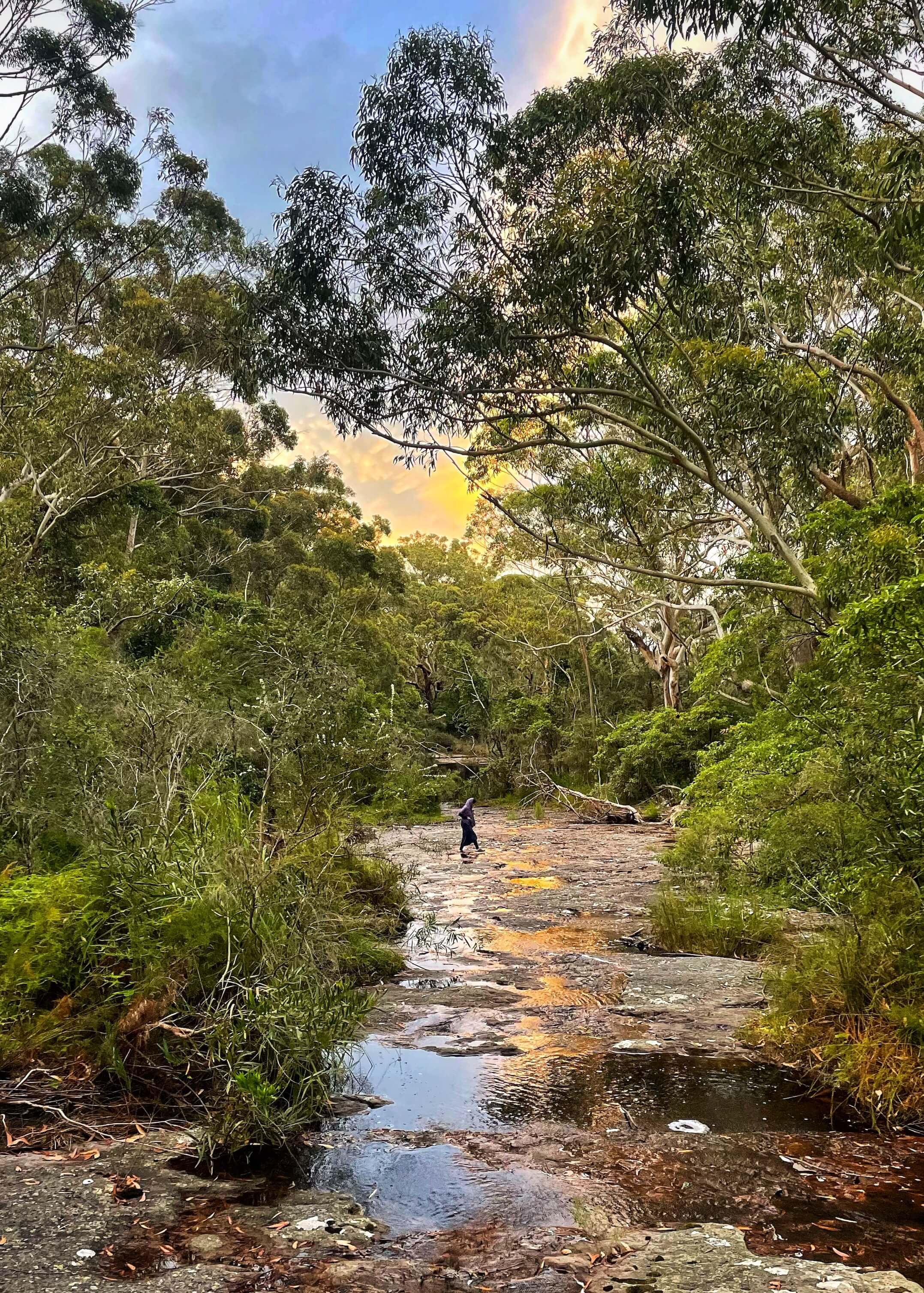
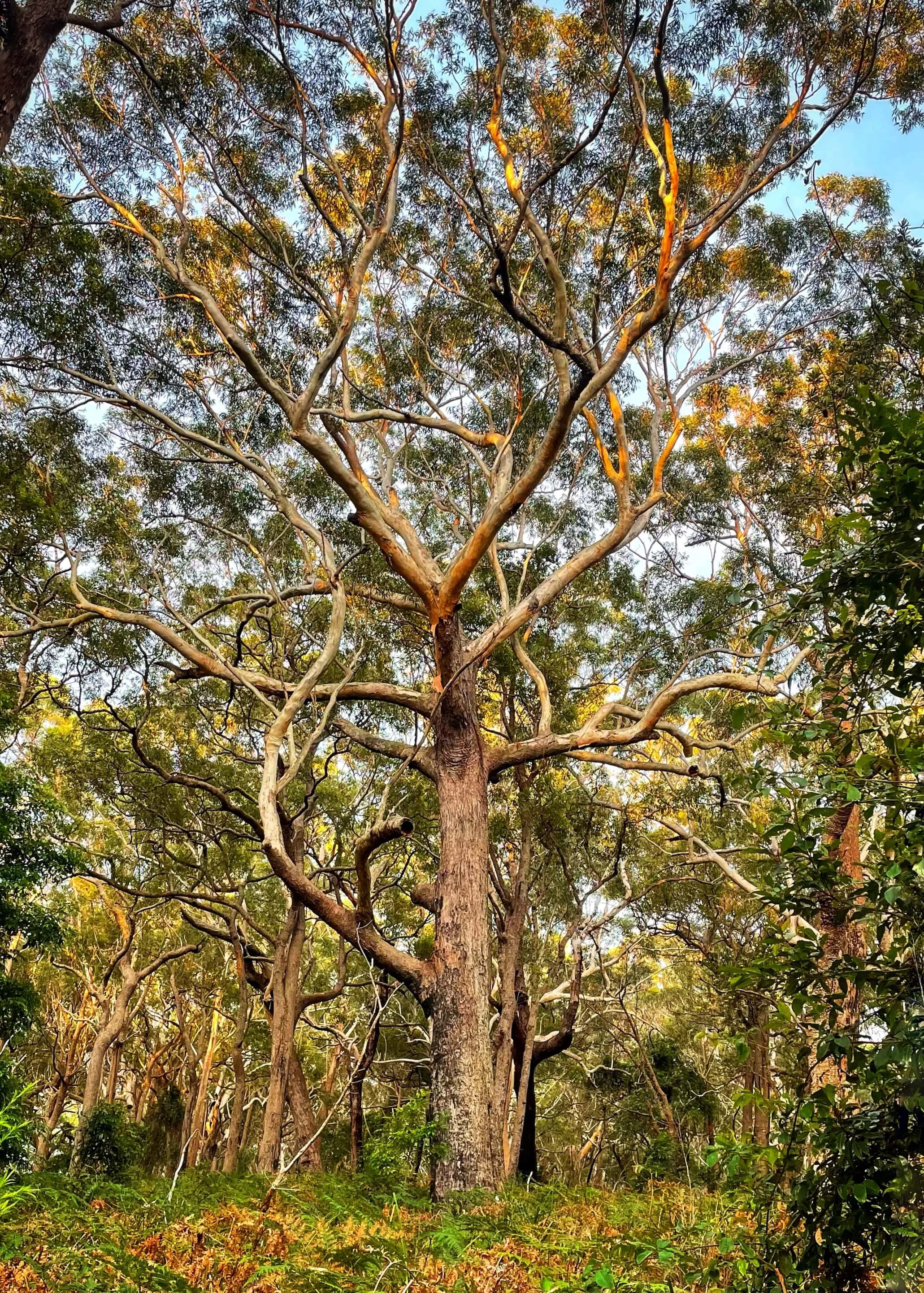
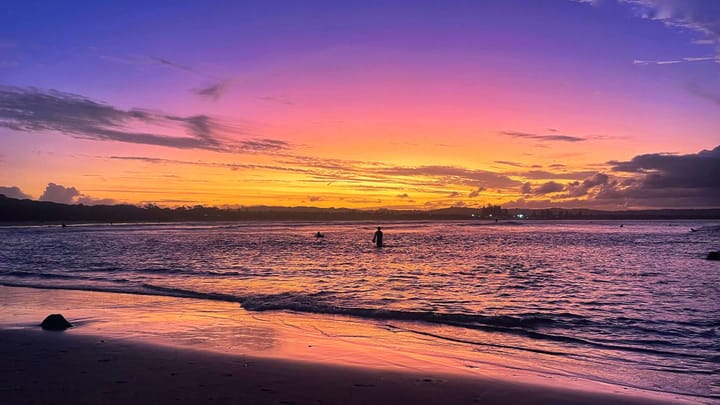
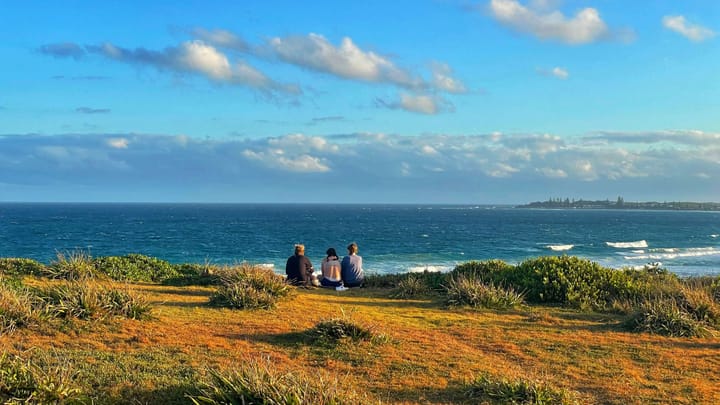
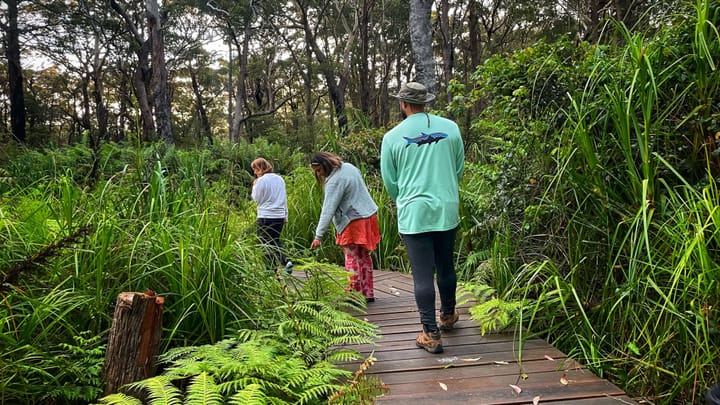
Two more images from my sunset nature walk in Australia with friends, because sadly, my pictures from these 2017-2019 adventures I'm recounting currently live on a hard drive somewhere in my parents' basement.
When people ask me why I solo travel, these are the memories that flood my mind. The stories of all of the times I've made real connections abroad simply because I was alone, and maybe I didn't fit in, or stood out in some way, and someone felt compelled to get to know me.
We're all searching for human connection – and when I didn't find it at home, I traveled.
I connected through people to their culture, saw their life and mine through their eyes. I had experiences with new friends on the road that I couldn't have planned – and were sometimes even better than the ones I did.
Huong, who I later learned was a manager at the hostel in Vietnam, offered to take me around Hoi An on the back of her motorbike after she discovered that I had never ridden one before.
"I can rent one?"
She laughed at me and said that it was hard, so I climbed on, and hoped for the best.
We saw her city as she saw it. She took me to a fancy Vietnamese coffee place that she liked, where I saw a white man working on his laptop and got my first taste of "expat" (and pre-COVID digital nomad) culture abroad. Then she took me to eat white rose dumplings which were slippery and soft and tasted like how you'd imagine cherry blossoms would.
We went to Cam Kim Island and saw water buffalo, we took pictures of temples and bridges, we picked up her dress, we got a flat tire, we ate lunch, and had a wonderful adventure. I felt then, as I do now, blessed to have met her. At the end of the day, I learned that she hoped to leave the hostel job and become a tour guide – which she later did, and then she met and married a German man, and now they have a baby.
What is it that makes a friend a friend? Do you ever think about this? The progression from stranger to acquaintance to friend. How at some point a person crosses that threshold where the word feels appropriate, but it's not like you ever sat down to "make it official."
It baffles me, somewhat, that this happens as fast as it does while traveling. How quickly and easily random people choose to spend time together, and then become friends.
When we travel, we are presenting an open and curious self to the world. Maybe it's not that it's easier to make friends when it's impermanent – but that it's harder at home because in the familiarity of our daily routines, we're closed off to something new.
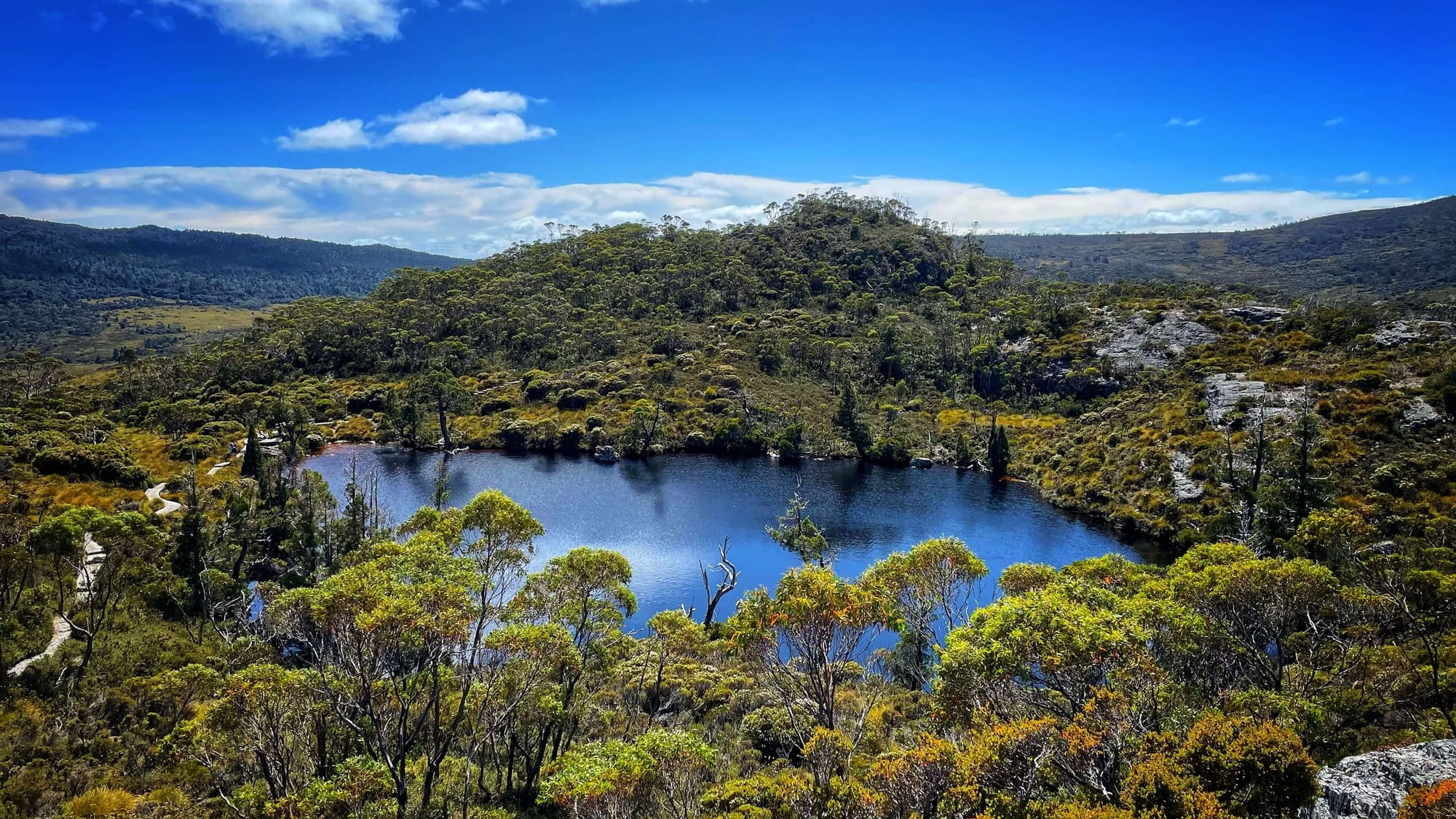
It happened to me in Tasmania, Australia. I was staying a few days at a hostel in Cradle Mountain to hike. The girl in the bed opposite me, Amber, had just moved from London to Melbourne and was taking a few days off from her job as a sommelier. We got to chatting and I don't know what it was about her, exactly, but something felt familiar. She was low-key, and friendly, and seemed like the kind of person who was well-read. I realize how ridiculous this sounds. But this is the best I can do to articulate the conundrum that is on my mind.
How exactly do we choose our friends?
We ate breakfast together and then went our separate ways for the day. Later that morning, I stood for some time by the side of an alpine lake with my binoculars, watching with wonder while a lone platypus swam and played, like an otter. Serendipitously, I spotted Amber coming up the trail behind me.
"Look! A platypus! " I said, excited to show my friend what I had found. Her eyes widened in delight and I handed her my binoculars to get a better view. She had never seen a platypus before, and neither had I. After, we walked together along the trail, and then made plans to meet up in Melbourne, when we were both returned.
On her day off, she took me to a pho place in a parking garage that I never would have discovered alone. It was cheap and delicious. We went window shopping at boutiques, while she looked for suitable work apparel. We found a top we both liked, but I told her she should have it, as I already had a luggage issue. She didn't end up getting it either. It was a little pricey, and she was wishy washy about whether it was a wise purchase, or an impulse buy to look cute for the boy she worked with that she was in the early stages of a relationship with. I did, later, meet the boy, and with a grand flourish he brought us appetizers and generous pours "on the house" and I looked at her and nodded my elated approval.
But before we left the boutique, the shopkeeper inquired about whether we lived in Melbourne, and Amber answered, without skipping a beat: "Oh, this is my friend, visiting from out of town."
Perhaps it doesn't matter how we choose our friends – only that we're willing to claim them as our people.
And that's what travel helps me to remember – how easy it is to belong in the world.
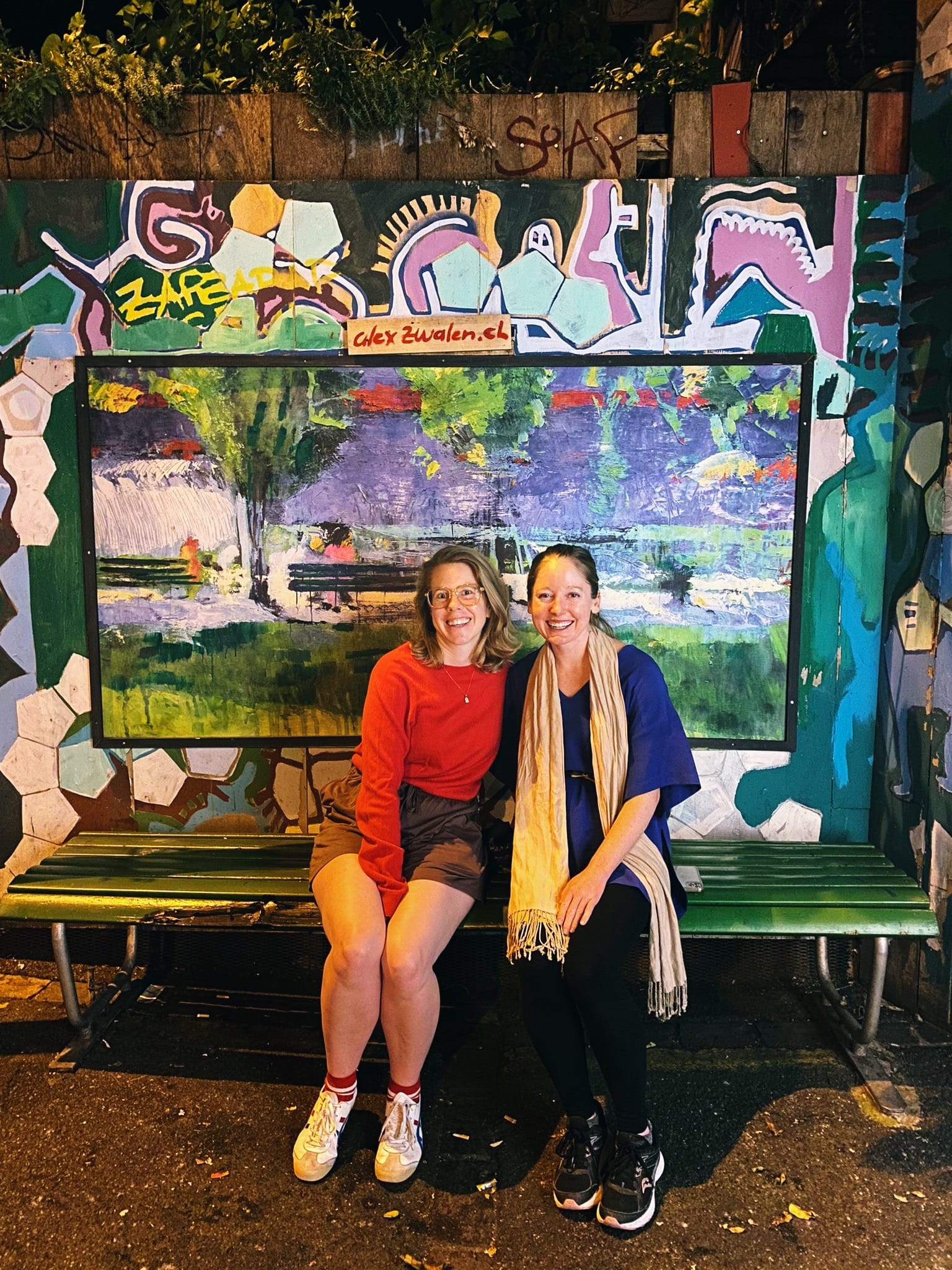
We met in Australia. This is us in Switzerland.
Say what you will about hostels after 30, but this is where I've consistently made lifelong friends. And when you save money on a bed, you get to splurge on experiences like orchestra seats for the Sydney Theatre Company. 😉
Next week, paid subscribers are getting the ultimate guide to surviving hostels after 30. Want access?