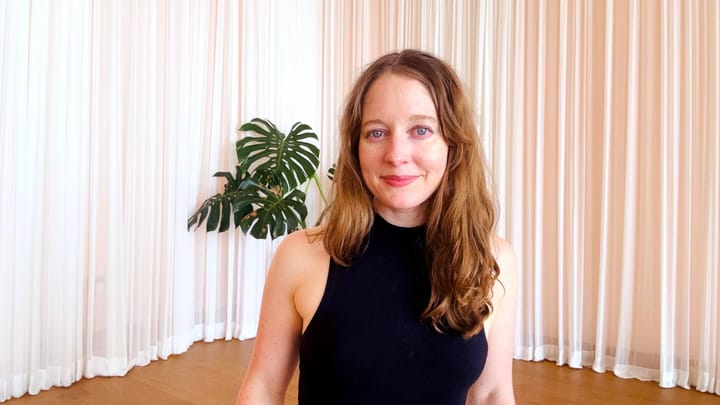
What does it mean to be present?
It can be showing up for your kid's recital or game. It can be the attentiveness that you give to someone when they tell you what's on their mind. It can be the indescribable quality of gravitas and magnetism of a leader who commands the stage.
Presence isn't just about being in the room, it's about being in your body. There is an awakened soul behind the eyes and ears of a person who is present, and when you leave the presence of a present person, you feel truly seen and heard.
Presence inspires. It is a breath of fresh air in a world where people are performing, hiding, hoping to be who others expect them to be, some palatable, watered down version of themselves who plays it safe, goes with the flow, and speaks to seek approval, rather than contribute substance.
You've met them. They're on your team. You probably talk to them most days. They're either a real person – or they're your preferred AI chatbot.
Are you choosing performance over presence? And at what cost?
In the age of AI, presence is a competitive advantage – and there's data to prove it. Here's the power of presence and how to cultivate it.
Why We Perform
There is a sad irony in paying thousands of dollars for a 300-hour teacher training called "Embodied Presence" only for every email the lead facilitator sends to be written by artificial intelligence.
I frowned when I opened the emails, which asked me to respond to post-training integration questions in order to complete my certification. On top of the fact that it was clearly written by AI, the questions also lacked substance. They didn't reflect the depth of the territory we had just traversed together. These were questions that didn't require presence in the room to draft.
The emails were performative, and the entire exercise I was being asked to do was performative. He didn't care what I wrote, and he didn't care if I wrote it. As long as I answered some generic questions about how the training transformed me, I checked the box.
Maybe he was busy, I told myself. Maybe English is his second language. Maybe he doesn't care.
That's the problem when you choose performance over presence. Maybe you chose it because you thought it sounded better or more intelligent. But to the people on the receiving end, it makes them think that you don't care.
Brené Brown spent years researching why people struggle to show up authentically — and what she found was that it isn't laziness or indifference. It's shame. From an early age, most of us are taught to suppress vulnerability to appear strong and self-reliant — and when we hide our true selves, we inadvertently reinforce the belief that who we are is someone to be ashamed of.
So we build armor. We use perfectionism, numbing, and performance to avoid feeling vulnerable — and in doing so, we lose access to the very things that make us effective: creativity, connection, joy and love.
AI is the latest and most sophisticated armor we've been handed. It can write your integration emails, generate your talking points, and optimize your responses. The problem is that we're using it to manage how we're perceived, rather than risk being seen.
The world doesn't need an army of 1000 people who think the same. The world needs you — the unique, sometimes flawed, thinking and feeling, you.
 Clara Ritger
Related Read: What AI Can't Replace? Living your life for you. And I think we're on the brink of a return to live, in-person experiences as an antidote to a digital world saturated with generated performance content.
What Performance Costs
I spent a decade creating documentaries, branded content, and talent-driven series for NBC News, the Wall Street Journal, and TLC. I also directed and produced corporate videos for Fortune 100 companies, coaching C-suite executives on their camera presence and speaking delivery.
One such video I did was about an investment fund that found that simply by investing in companies that met certain diversity measures, they could consistently outperform the S&P500.
Diverse teams think differently from each other, and that friction produces better ideas, better decisions, and better results. A recent Diversity Matters report from McKinsey found that companies in the top quartile for ethnic diversity show a 27% average financial advantage over others, and those in the bottom quartile for both ethnic and gender diversity are 66% less likely to financially outperform their peers. The World Economic Forum found that companies with above-average diversity scores generate 45% of their revenue from innovation, compared to just 26% for those below average.
The business case for human diversity of thought has never been stronger — or more at risk. Consider what happens when every person on every team starts outsourcing their thinking to the same AI, trained on the same data, producing the same outputs. We don't just lose individual voice. We lose the organizational diversity of thought that the research says is a competitive advantage.
Homogeneity of mind is expensive. It's only a matter of time before we have data to quantify the cost of outsourcing human thought to AI too.
But the most expensive thing we're losing isn't market share.
It's ourselves.
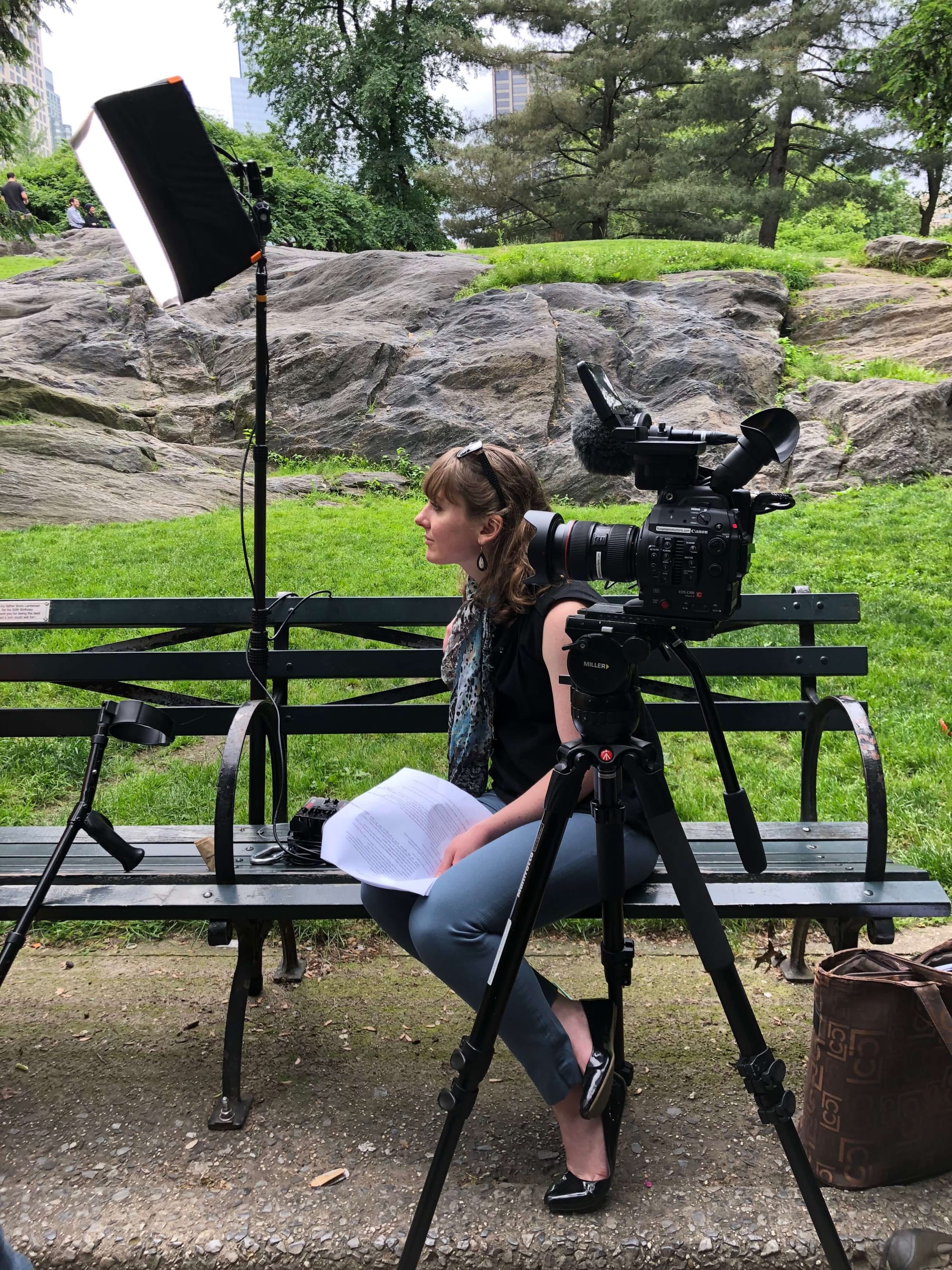
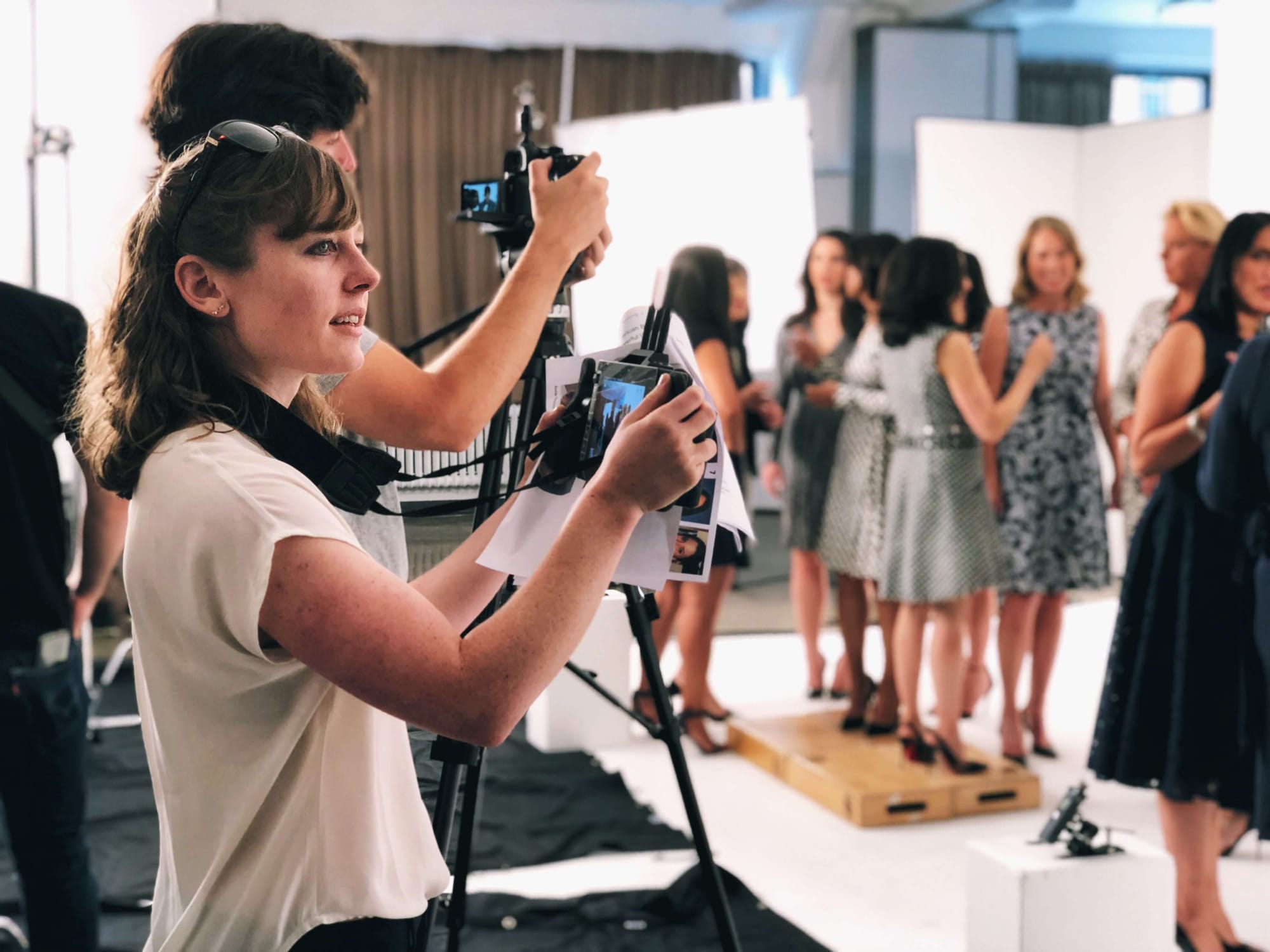
Clara Ritger on set in Central Park and a Tribeca studio in New York City.
The Difference Between Performance and Presence
Most leaders are performing.
They perform confidence in the boardroom. They perform certainty in the all-hands. They perform gravitas on camera. They manage people’s perception of them so carefully that they lose access to the one thing that would actually make them effective: themselves.
The cost shows up everywhere — reactive decisions, frustrated and distrustful teams, cultures that look productive but feel disconnected, and change initiatives that quietly lead to burnout and turnover. Gallup estimates that low employee engagement — burnout's most direct symptom — costs the global economy $8.9 trillion annually. The American Institute of Stress puts the price of workplace stress to U.S. employers alone at over $300 billion a year.
As AI takes over more analytical work, the human skills leaders rely on in high-stakes moments — calm, clarity, compassion, confidence — are becoming the real competitive advantage. The World Economic Forum's Future of Jobs Report identifies self-awareness, emotional intelligence, and resilience as among the fastest-growing skills in value as AI handles more cognitive work. And those aren’t performance skills. They’re embodied ones.
When I coach executives on camera, I see firsthand the difference between someone who is present, and someone who is performing. I watch in real time as they navigate the tension that most leaders face: the belief that performing a version of themselves is safer than being themselves.
They don't need me to coach them how to perform on camera. What they need is to be so embodied that they step in front of a camera and radiate that magnetic presence that turns heads.
The most powerful thing a person can do is stop performing who they think they should be, and start being who they are.
How to Cultivate Presence
I used to think that people with presence were special. Either they knew something I didn't, or they had the ability to fake confidence that I never would. It was only through my own metamorphosis and coming into presence that I realized, this isn't a personality trait you either have or don't. It's a capacity — and like any capacity, it can be trained.
Meditation is the place where I started, and it's where I recommend most people begin, given the unequivocal data to back it up. Research published in Nature Reviews Neuroscience shows that consistent mindfulness practice results in neuroplasticity — observable modifications in the brain areas associated with regulating emotions, focusing, and self-awareness. Studies from INSEAD and Wharton show that meditation improves the specific capacities that define leadership effectiveness: ability to direct attention, managing reactivity, making decisions and resisting cognitive biases. And the benefits aren't limited to long-term meditators — acute effects on cognition and decision-making have been observed after as little as 10 to 15 minutes of focused practice.
This 5-minute breathwork meditation practice will help you to transition between meetings, work and home, or any other activity of your day so that you arrive with presence. While you're here, subscribe to my YouTube channel.
But how does meditation translate to presence? This is what I spent years learning somatically, before I trained to teach others. My work is grounded in my own experience — from burnout and years of unexplained physical illness to discovering how meditation and nervous system regulation can fundamentally change how we live and lead. I teach from the lived wisdom of having navigated the shift from performance into presence myself, which I write about in my forthcoming memoir, and in this newsletter.
You can't think your way into presence. It's a shift that happens somatically, in your body, and meditation is the foundation, the safe space where the work to create that shift can happen.
The body keeps a running account of everything the mind tries to manage. Stress doesn't disappear when you push through it. Grief doesn't resolve when you stay busy. It just goes underground, and surfaces at the worst possible moments: in the meeting where you lose your composure, in the decision you make from fear instead of clarity, in the exhaustion that arrives one day and doesn't leave. Hello, burnout, my old friend.
Presence is the practice of coming home to yourself. Of learning to hold space for your truth, so that you can hold space for others. Whether you're leading a team of 50, or just trying to show up more fully in your own life, the practice is the same.
Work With Me
I help people develop the capacity to move from performance into presence.
I bring my experience as a filmmaker and my training as a meditation and somatic movement teacher (RYT-500) and trauma-informed coach to help leaders build the internal capacity to stay grounded, think clearly, and respond rather than react — so they can perform without performing.
Here's how we can work together:
- Corporate workshops on nervous system regulation, mindfulness, and the power of story — helping teams access clarity under pressure, make better decisions, and shift the patterns that keep them stuck
- 1:1 executive coaching on embodied leadership, high-stakes communication, camera presence, and decision-making from clarity
- Keynotes and conference sessions on leading through uncertainty, burnout prevention and recovery, and emotional and embodied intelligence as a competitive advantage in the age of AI
- Organizational culture and personnel consulting, including integration support for sabbatical and extended-leave programs
- Video production and on-camera talent direction for brands and organizations who understand that authentic presence — not polished performance — is what actually moves an audience
Investment in mindfulness-based workplace interventions has been shown by multiple studies to return thousands of dollars per employee in performance and productivity gains, and reduced burnout and disengagement (Aetna, Journal of Occupational Health Psychology).
If you are an organization or leader investing in emotional, embodied intelligence alongside artificial intelligence — or you need a producer who has spent a decade helping people find their authentic voice on screen — let's connect.
 Clara Ritger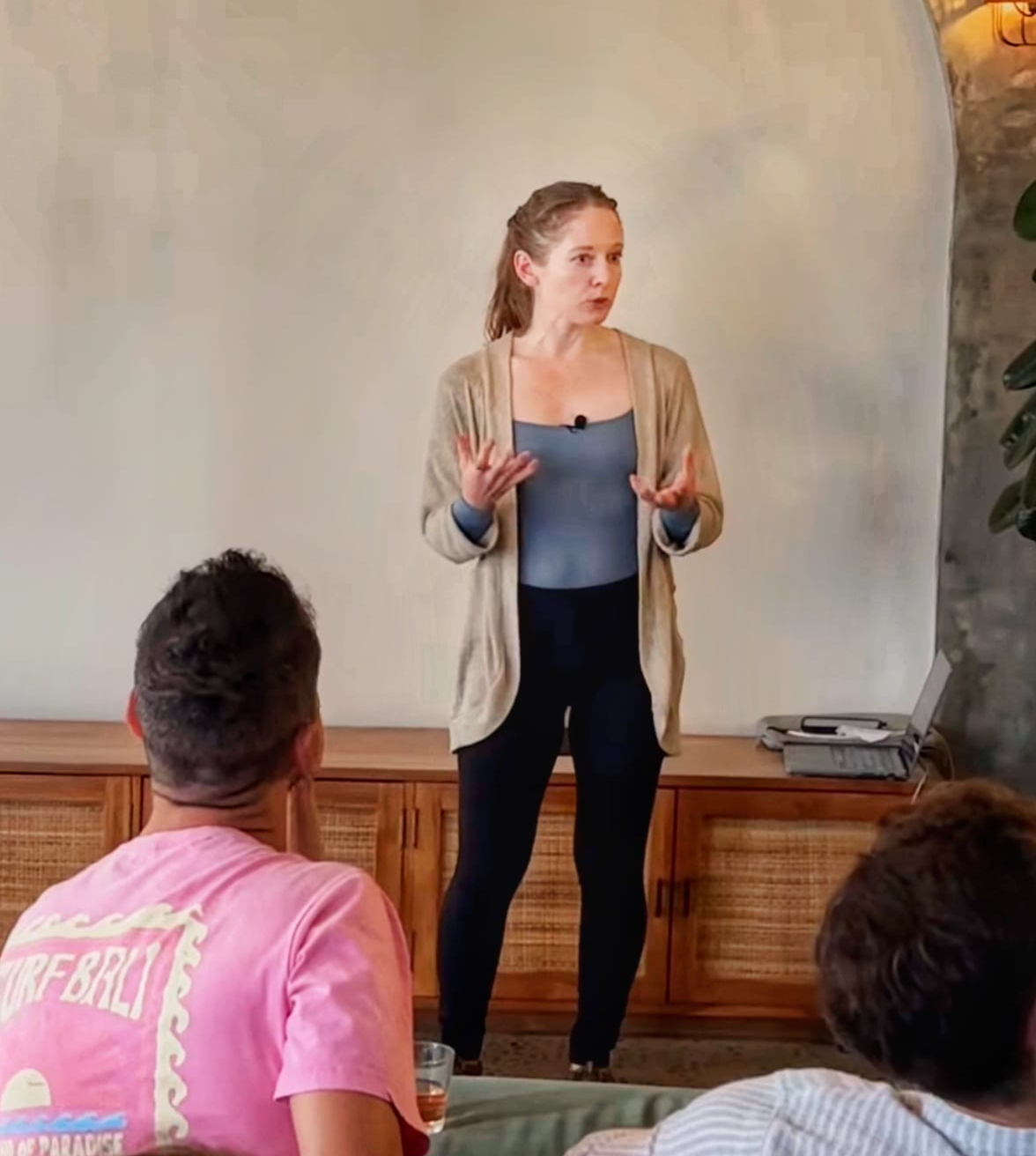
More details on my offerings live here, but you can also email me directly at clara[at]adventuretoawaken[dot]com.