For most of my life, I was an object in motion, hurtling forward in space with a clear trajectory. I was handed a map to where I was going, and with enough force, I obliterated anything that stood in my way.
But did I actually want to go in that direction?
An object in motion wants to keep moving in a straight line. The faster it goes, the more it resists any change to that path. Speed for me looked like running, overworking, perfectionism, busyness, obsessing, worrying, doing. Rest had to be earned, to keep the inner critic at bay for all the things I should be doing, instead of being still.
Going fast kept me from reckoning with the question of whether I liked the direction my life was headed.
There were many times when my body forced me to stop, but I never really could for very long. I ping ponged between pain and pushing through. I worked from the hospital. I traveled the world and then wrote a memoir about it. And though my motion did not stop, every health challenge created a drag force on my motion, slowing me down, enough to where I could look around me and ask, "which direction do I want to go?"
If you are lost and looking to find direction in life, it might be because you've gotten a diagnosis or ended a relationship – or simply because you hate your job. It also might be because you've reached those milestone ages of 20, 30 or 40 and you aren't sure who you are, but you're pretty sure you should have it figured out by now.
Or maybe there's something nagging inside of you, telling you you're going in the wrong direction, pointing you in the right direction – but you're scared to take the uncharted journey.
Here's how to shift the course that you are on and find your direction in life. Feeling lost and directionless might be the prerequisite to a great discovery.
So you're lost. Congratulations!
On paper you have everything, but you feel like you have nothing. You've achieved what you've set out to do with your life, but something inside of you says there must be more. You feel like you're going through the motions, and you aren't sure what your purpose is. Or maybe you've been toiling away without reaching the goal you had thought you would by now, and you're not sure what to do next. Decisions feel hard and you ruminate over them. You're pretty sure you're lost, but you'd rather continue the direction you're on than change direction and regret it.
Congratulations! Feeling directionless is better than feeling nothing at all; there's still a voice inside of you that you can hear. This is worthy of celebrating. Our attention is everywhere but ourselves. We have more directions to choose from than ever before, presented to us with destabilizing velocity and volume through our phones.
 Clara Ritger
Related Read: Advice from surviving a midlife crisis — and questions to ask yourself if you're in the midst of your own.
Eliminate choices.
If you're trying to find direction in life, it's not because directions don't exist. It's because the choices are paralyzing. Start by eliminating some options – and some of the noise – to make it easier to hear yourself and your intuition. Yeah, the Instagram influencer making money doing makeup tutorials looks like a nice life, but is that something you're passionate about? No? Great, you've crossed out one option. Keep going.
This is more of a bottom-up approach to finding direction, exploring all the different possibilities that exist until you settle on one that feels right. But with an infinite number of possibilities, you might find it easier to take a top-down approach to finding direction, by figuring out what you're passionate about and how you want to spend your time, and then seeing what directions are left.
I think a lot of us look to other people to give us direction, because it is easier than taking self-responsibility; if we fail, we aren't the one to blame. But no one who looks like they "have direction" actually has it all figured out, not even me; if they did, they'd be selling it and they'd be a billionaire.
Change direction to find direction.
Writers write a lot, and throw it out and start over if they don't like it. You can live life the same way. Be like the wind and change direction often. Find something that makes you feel alive, and follow it until it leads you to the next passion.
You might never really "find direction" but what you will find when you look back on your path is a life you enjoyed living.

Think of your life like a movie. If the main character always went in the same direction, you'd get bored pretty quickly. It is better to go in the wrong direction because we tried and failed than to go in no direction or to go in someone else's direction because we're scared of taking responsibility for our own life story. Be the main character and "do it for the plot."
Along the way, you'll probably stumble on your purpose. Purpose is discovered by trying things out and understanding what is "not" our purpose. Until one day, it clicks.
If you want a more structured approach to finding direction, the Japanese concept of ikigai offers a useful framework. Ikigai sits at the intersection of four questions:
- What do you love?
- What are you good at?
- What does the world need?
- What can you be paid for?
Direction that satisfies all four tends to be both purposeful and sustainable. Most of us find one or two of these easily and spend years trying to locate the others. It's worth mapping where you currently land, and noticing which quadrant feels most foreign. That might be the direction you need to move in.
Slow down.
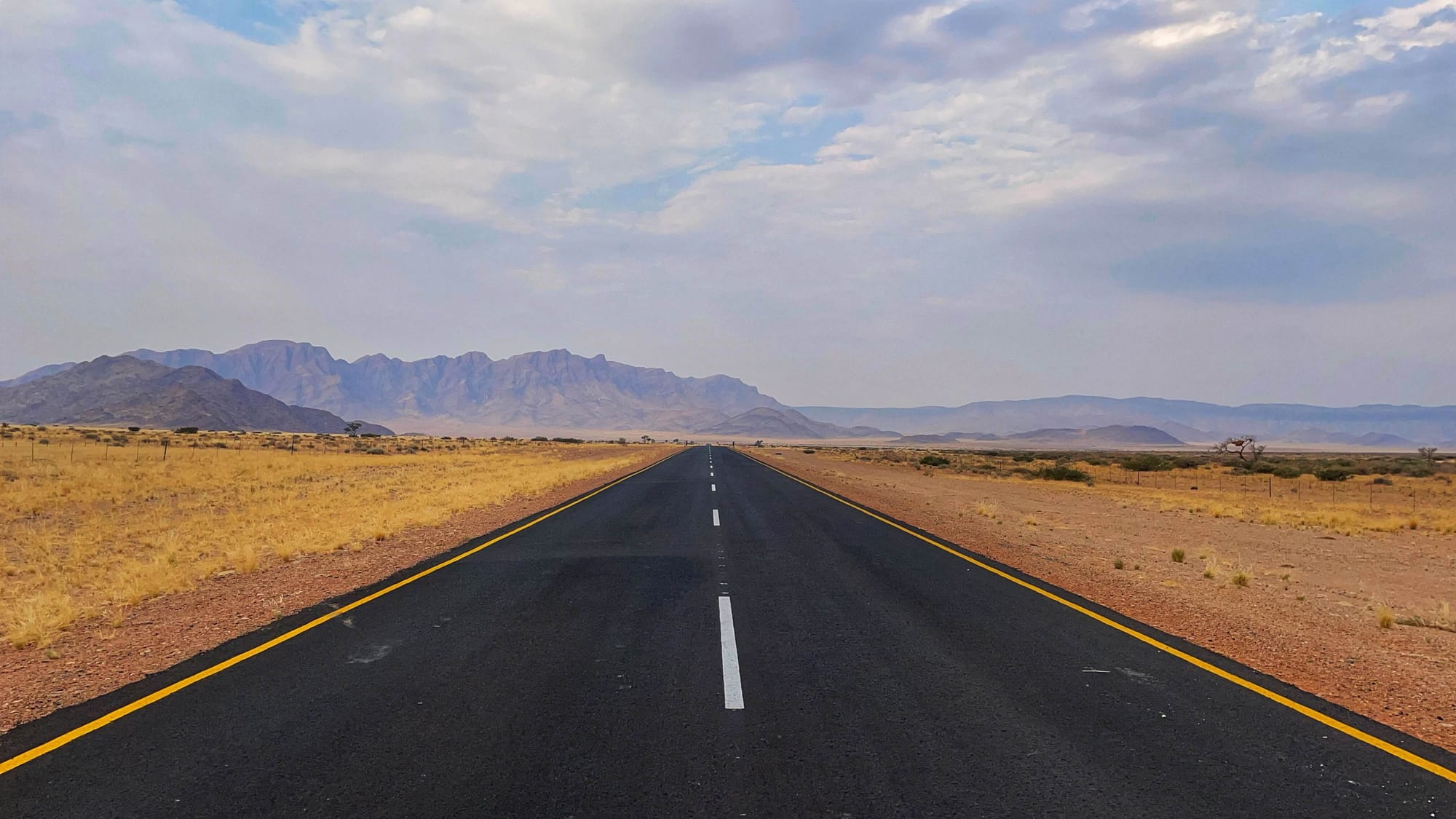
Slowing down makes changing direction physically possible. When I got my motorcycle license, we did an exercise on the course to demonstrate the effect of speed on our ability to change direction. The faster our speed, the more time and distance it would take to complete the turn. The point was to show us that certain speeds make it physically impossible to change direction; the wide turning radius required to complete the turn exceeds the space that exists on the road.
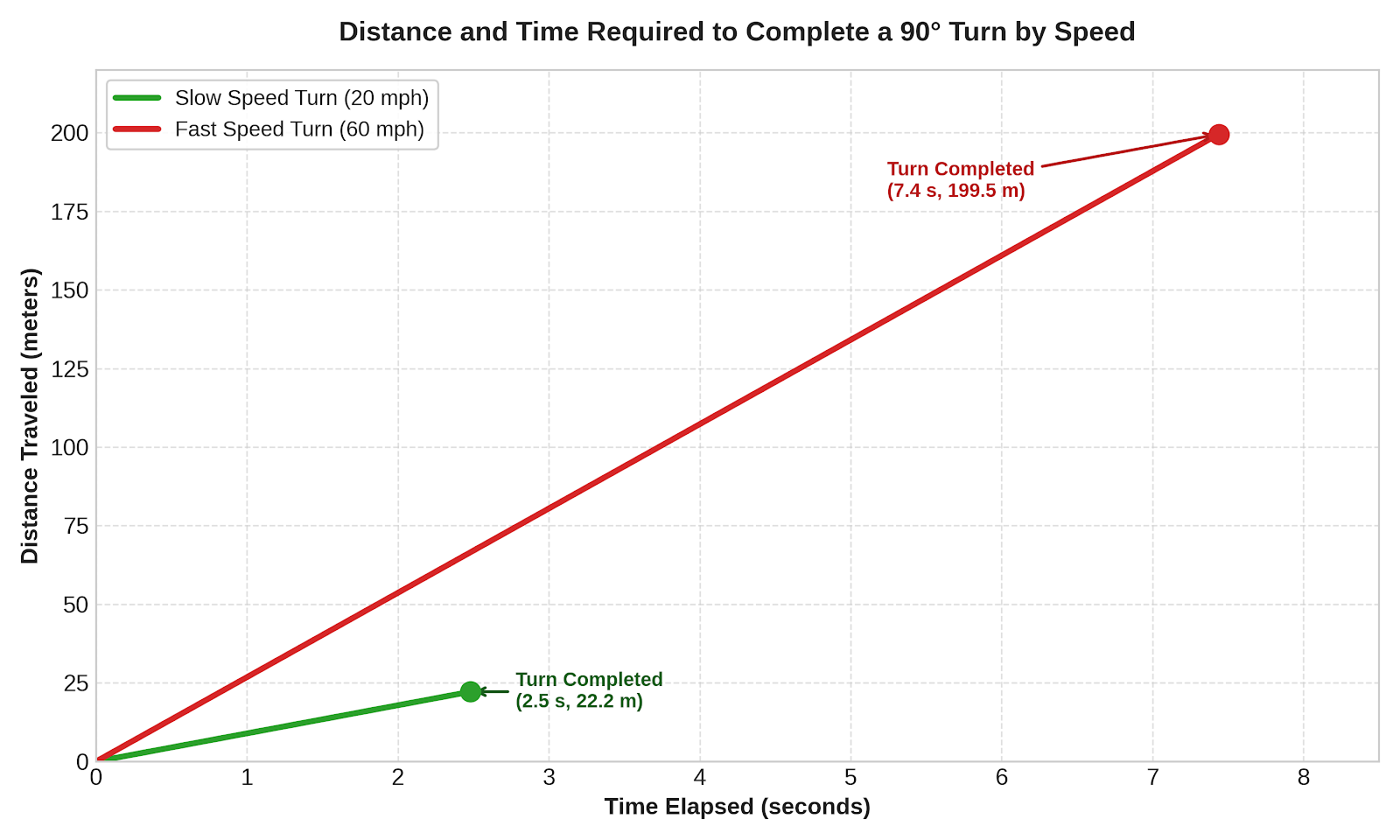
Go fast and you might never actually get in the direction you want to go. Go so fast that you can't change direction, so you never have to reckon with the challenge of navigating a new path. Go slow enough and you can change direction all day. Go slow and you can peek down a couple of roads, see something further ahead that catches your eye, and say, "hey, let's go check that out!"
Stop and ask for directions.
The first time I ever truly felt directionless in life was when I finished writing my memoir. Now what? I wondered. I moved to Bali to buy myself some time to figure it out. I tried and experimented with a few different directions. And I asked my inner compass to guide me.
Direction comes from inner truth. If you feel like you can't find direction, it might be because you can't hear the voice inside that is guiding you.
Often we look for direction from other people, which can be helpful to an extent. I love reading stories about how people got to where they are today, but I haven't successfully replicated any of them. I've talked to a lot of other people about their paths, but I've also found myself more lost trying to make their recommendations fit even when I know they don't.
In the process of stopping, emotions will arise. We'll get frustrated that we're lost, that the map is outdated, that the road Google She took us down is not as easy as advertised.
 Clara Ritger
Take a detour and read my funny-after-the-fact tale of driving in France.
But those emotions are pointing to truth. Finding direction is about following the signposts of our emotions that tell us what is ours and not ours.
Connecting with your internal landscape might be the best map to navigating the external one.
This is a 15-minute guided meditation to help you connect to the present moment. When we are struggling to find direction in life, it can help to shift out of future-thinking and back into felt presence. I'm publishing new meditations and talks weekly on YouTube. Subscribe to my channel to help my meditations reach more people!
Allow yourself to be directionless.
I think I was lost for longer than I was willing to admit. Because I had been handed someone else's map and it didn't apply to the terrain I was looking at. And because I didn't know it yet, but it wasn't the journey I wanted to go on. I was moving toward the wrong north star.
From the outside, people without direction look lazy, apathetic, or even behind. There is a chaos that comes with being directionless. Everyone has an opinion to offer on your path forward, and every external input has the potential to shift your direction, like a pinball being thwacked to every side of the machine.

But there is also a spaciousness that comes with being directionless, if you can sit with the discomfort of uncertainty, and even allow yourself to get bored. In fact, some of the greatest creations of all time came on the other side of a period of being lost. Vera Wang has described herself as feeling lost after missing out on the Olympic figure skating team; you probably didn't even know that about her because she became a fashion mogul on the other side. Stan Lee was a comic book writer in his late 30s who felt burned out and purposeless in his career; his last project before he planned to quit was to create The Fantastic Four, which paved the way for the Marvel Universe.
Even the physics concept that I'm using as the backbone of how to find and change direction in life – the laws of motion – were created by Isaac Newton when he was bored during the Great Plague of London in the 17th Century.
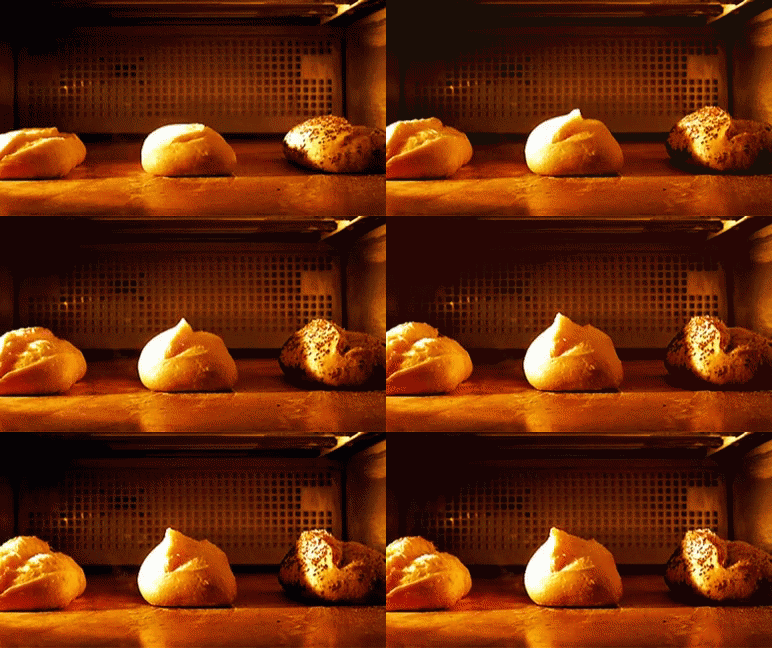
We think that being directionless is a problem to be solved immediately, but being lost is a normal stop on the game of life. Rather than finding direction, you might just need to find the right support system to allow yourself to be in this space of not knowing until an authentic direction emerges. Embrace the uncertainty and discomfort, and wait. You'll know when the knowing comes.
Consider the possibility that you are not lost.
When I was a toddler, my parents lost me. I, however, was not lost. I knew exactly where I was. I knew the path to get to the fish tank at the county fair, and I walked it, all by myself. I told no one where I was going. (Or maybe I did, and they weren't listening.) And I got exactly where I was trying to go.
Sometimes you don't need a map. And you don't need the people around you screaming that you're lost. If I listened to those people, I wouldn't have gotten to where I was trying to go. You know the way.

Imagine if the Wright Brothers followed the map that we had for how objects behave in gravity. They would never have invented engine-powered flight. Was it risky? Yes. Was it slightly delusional? To the people around them at the time, most certainly.
They tried 200 different wing shapes in a wind tunnel to figure out what might be possible. That's 200 different directions they tried out before finding the one that worked.
Finding your direction might feel like a discovery after a long period of experimentation. The direction you're meant to go in will have a pull, and it might require some experimentation until you find that "a-ha" moment of recognition once you've found it.
It also might feel like a return to truth, to an internal knowing that you've ignored.
Is it possible that you have a sense of direction, but you're afraid to take it, and so instead of taking it you have decided you're directionless?
Sometimes the problem isn't that you don't know your direction, it's that you do, and that's scarier than not knowing. In that case, it might help you to make the direction feel smaller so that you can start taking action. Make small decisions every day in the direction you want to go, rather than one big sweeping change. Be like the slow motorcycle, not the fast one. That way, if you decide you want to change the direction, it's within the realm of possibility. Or at least, that's what you're telling your nervous system so that it feels safe letting you go in the direction you know you're meant to go.
If finding direction feels like something you want support with — someone to help you slow down, hear yourself, and build trust and confidence in taking action — I work with a small number of people 1:1 through meditation, somatic movement, and trauma-informed coaching. Reply to this email if you'd like to explore whether working together is a good fit.