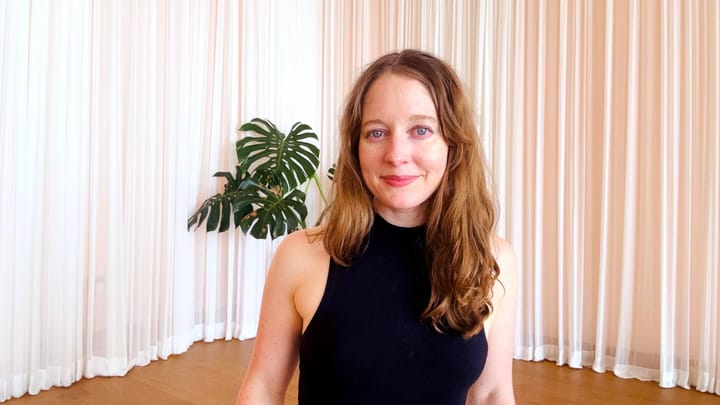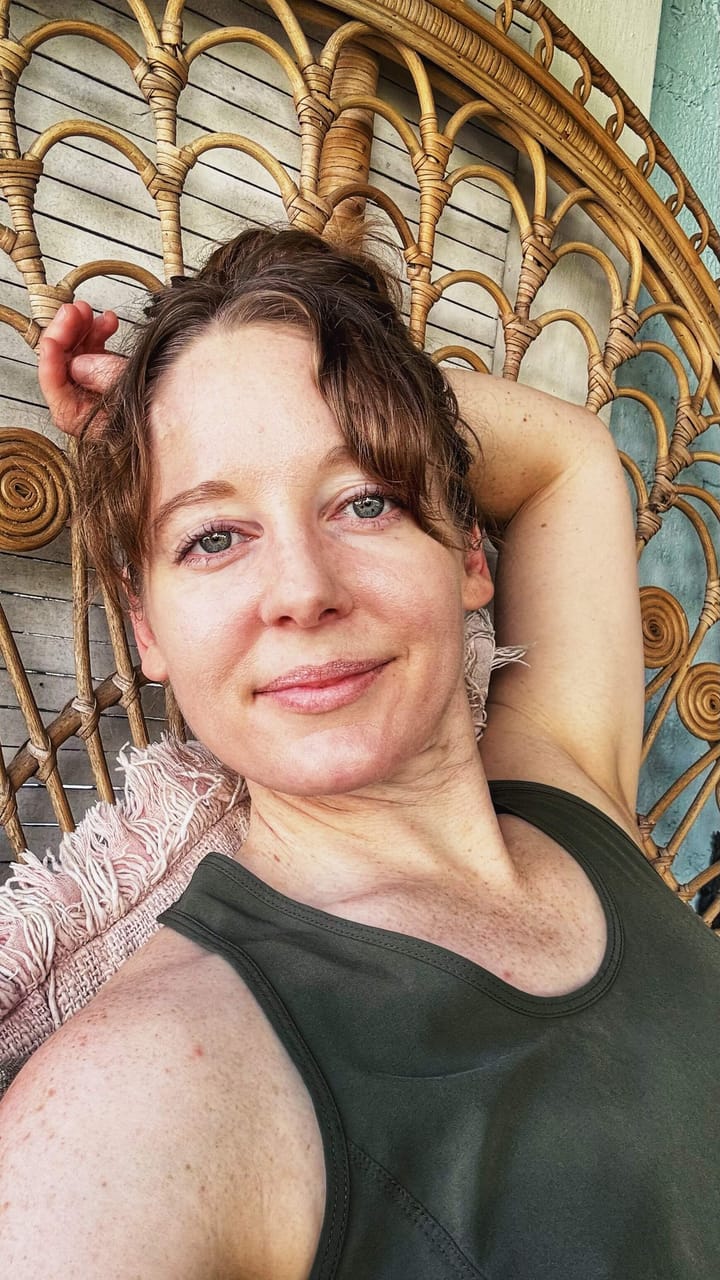
I quit my job to take an adult gap year.
People said I'd ruin my career.
I did.
I ruined the life I was building for everyone else...
And finally started building one for me.
I posted that on Threads last year and it went viral – which I imagine is because it takes everyone's fear and both validates it and flips it on its head.
I was 31 when I imploded the "success" I had spent my whole life working toward. From the outside, it looked like I was living the dream: a woman successfully running her own business in New York City as a documentary filmmaker, getting paid to travel across the country to shoot, and coming home to her picture-perfect life, right down to the exposed-brick apartment in Williamsburg, Brooklyn.
I was killing it. Turns out the "it" was me.
It felt like for every trip to the airport there was a trip to the doctor or emergency room with inexplicable physical pain. A few months shy of my 25th birthday, my appendix burst and now some six years later I still wasn't well. I became a medical mystery; doctors did what they could to respond to my symptoms, performing investigative procedures and tests, even suggesting things I could experiment with at home, but ultimately, they couldn't pinpoint or resolve the root cause of my chronic pain.
 Clara Ritger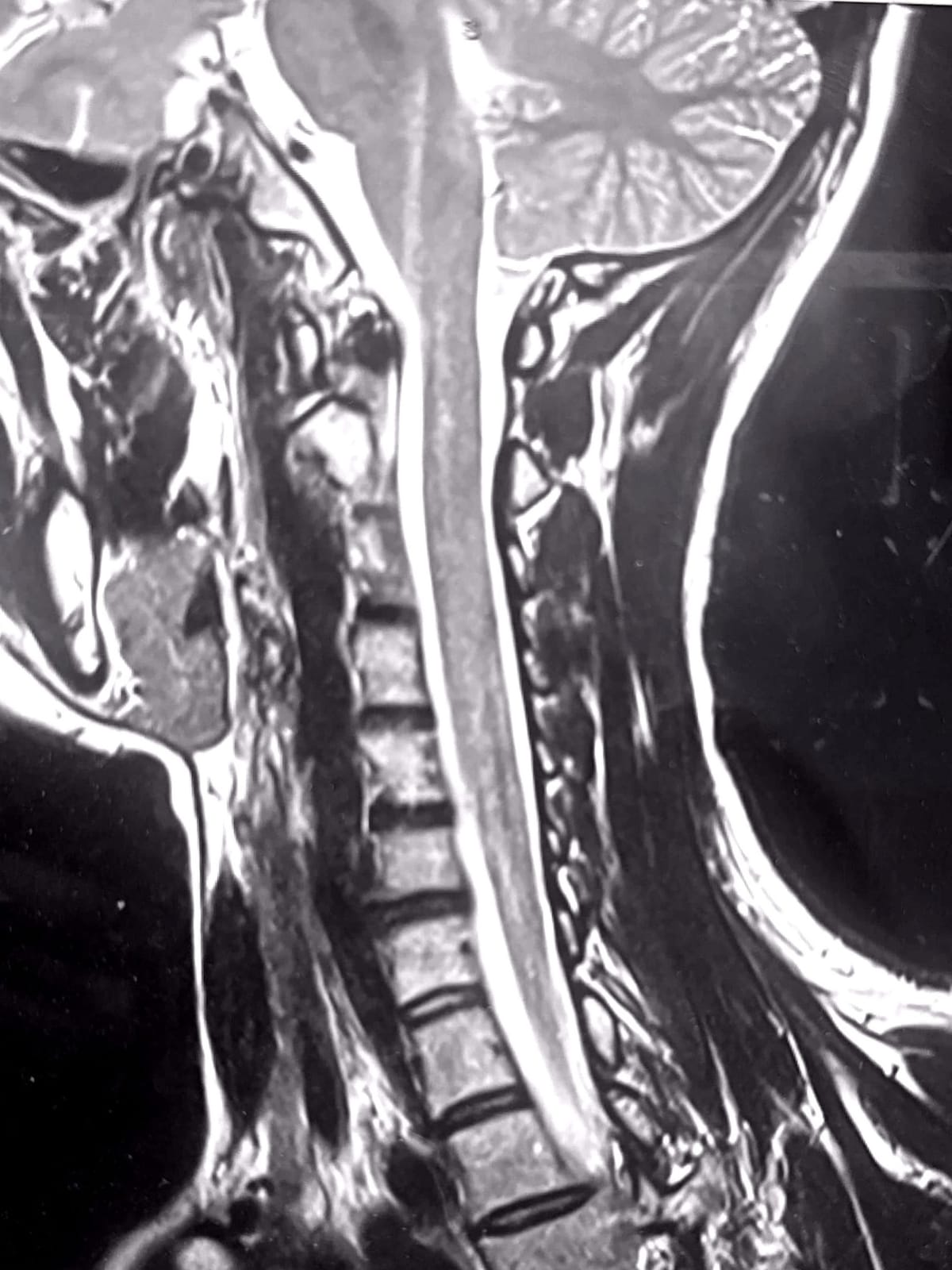
Related Read: How it feels to live in a body of constant pain.
Living in limbo came at an emotional cost, but it also came at a financial one. I might as well have set up a direct deposit from my clients to the hospital billing department; I had the personal cell phone of one of my surgeons, and some years, I spent more money on my health than I currently spend on annual living expenses in Bali.
I was, quite literally, working myself into the ground. And that isn't living. It's surviving... barely. So I upended my life, left to see the world before I died, unintentionally healed, and then wrote a forthcoming memoir about it.
Zoom out a little bit from the personal details, and my story is actually the story of a woman going through a premature midlife crisis. The stakes just happened to be sensational – dare I say, cinematic – because my midlife crisis was brought on by becoming acquainted with my own mortality, as opposed to a parent's.
What Is A Midlife Crisis?
A midlife crisis is the moment when you become aware of the finiteness of your life, and start to reflect on whether you are spending your limited time in a way that is meaningful to you.
This period of introspection is often brought on by life changes such as: the death of parents, job loss, missed promotions, marriage troubles or divorce, empty nesting, menopause/hormonal changes (for women), or personal health challenges.
Many of these life challenges naturally occur between the ages of 40-65, but if you find yourself re-evaluating your life and priorities in your thirties? Welcome to my club.
 Clara Ritger
Related Read: Whether you call it a premature midlife crisis or a quarter-life crisis, here's the signs and symptoms of my crash out.
People going through a midlife crisis typically examine their aspirations as it relates to relationships, career, travel, possessions — which can lead to some big life changes. Pop culture would suggest most men deal with their midlife crises by buying a sports car and dating a twenty-something. I decided to backpack Africa. 🤷♀️
In the 1930s, Carl Jung was the first to identify this psychological phenomenon, and actually, the fact that we've come to refer to it as a "crisis" doesn't reflect the intent behind what he observed. He saw it as a period of spiritual awakening, a turning point, even comparing it to the way that the sun changes its trajectory midday.

Ultimately, a midlife crisis is a feeling state that is asking you to take action to live your soul's truth – before it's too late.

What I'd Do Differently About My Midlife Crisis
If I could do my midlife crisis over again, I would. 😂
Seriously, what a trip! I backpacked through nine countries in Africa, spent time meditating, hiking and camping in Australia and New Zealand, expanded my idea of what life could be like in Bali, and then capped it all off with a little European summer in France and Switzerland. I lived.
Which is, coincidentally, what the midlife crisis is asking us to do. To live our lives before it's too late. I am so glad that I took up the call and let myself do the crazy thing that no one thought I should do. Healing my physical illness was just a byproduct of living my life. It was almost as if the universe said, "Here you go, you won, you figured out how to live, so here's your prize, now you get to live long and prosper."
(I'm still waiting for the prosper bit but it's coming, I know it.)
I'm happy with the way that my midlife crisis panned out, and I'm actually still integrating the deep soul shifts it created for me as I continue to step toward the life that I always dreamed of living as little Clara, but somehow along the way lost the belief in myself that I could. (More on that to come!)
There's nothing I'd do differently – and yet, I feel like I see other people completely upend their lives in pursuit of "more," only to wind up with less. More empty, more hollow, more unfulfilled.

Not everyone's midlife crisis needs to look like mine, and not everyone's should. Your midlife crisis should be a step toward a truer version of your life, and only you know what that really means in your soul.
Is the Midlife Crisis For Women Different Than For Men?
I'm sure it will surprise absolutely no one when I tell you that we actually don't have enough research to answer this question, because historically, women's midlife crises were written off as menopause (or peri-menopause or post-menopause). Early research on the midlife crisis focused on professional identity and work-related stress, which was an arena of life historically dominated by men, as women were relegated to the home. And the stereotype of how someone deals with a midlife crisis reflects the freedom that mostly belongs to men to upend their lives and leave their families behind. (Don't take my word for it, the New York Times bestselling memoir Strangers by Belle Burden documents exactly this story.)
The writer Ada Calhoun explored the modern midlife crisis for women in an essay for O, The Oprah Magazine that made the rounds back in 2017 and was later adapted into a non-fiction book, Why We Can't Sleep, published in 2020 (before the pandemic, which only exacerbated the at-home stress for women). Through interviews with women and doctors, Calhoun paints a picture of the midlife crisis that is largely different from men, insofar as the gender gap that still exists professionally and financially adds unique challenges to a woman's ability to navigate it. But many women do still find ways to act out, often self-sabotaging as an antidote to the pressure for perfection that is suffocating them in the first place.
It's undeniable that because my midlife crisis hit before I'd had a family, I was more free to take risks and make drastic life changes. But just because men are statistically more likely to abandon their lives (ahem, families) in their midlife crises doesn't mean you're not having a proper midlife crisis if you don't choose to do that.
When our midlife crisis results in destructive measures to "relive our youth" we're missing what it is about our youth that's worth reliving: the person we truly are, before the world told us who to be.
I'm sharing what actually helped me to navigate my midlife crisis for the women (and men!) who see the midlife crisis as awakening, not abandonment.
 Clara Ritger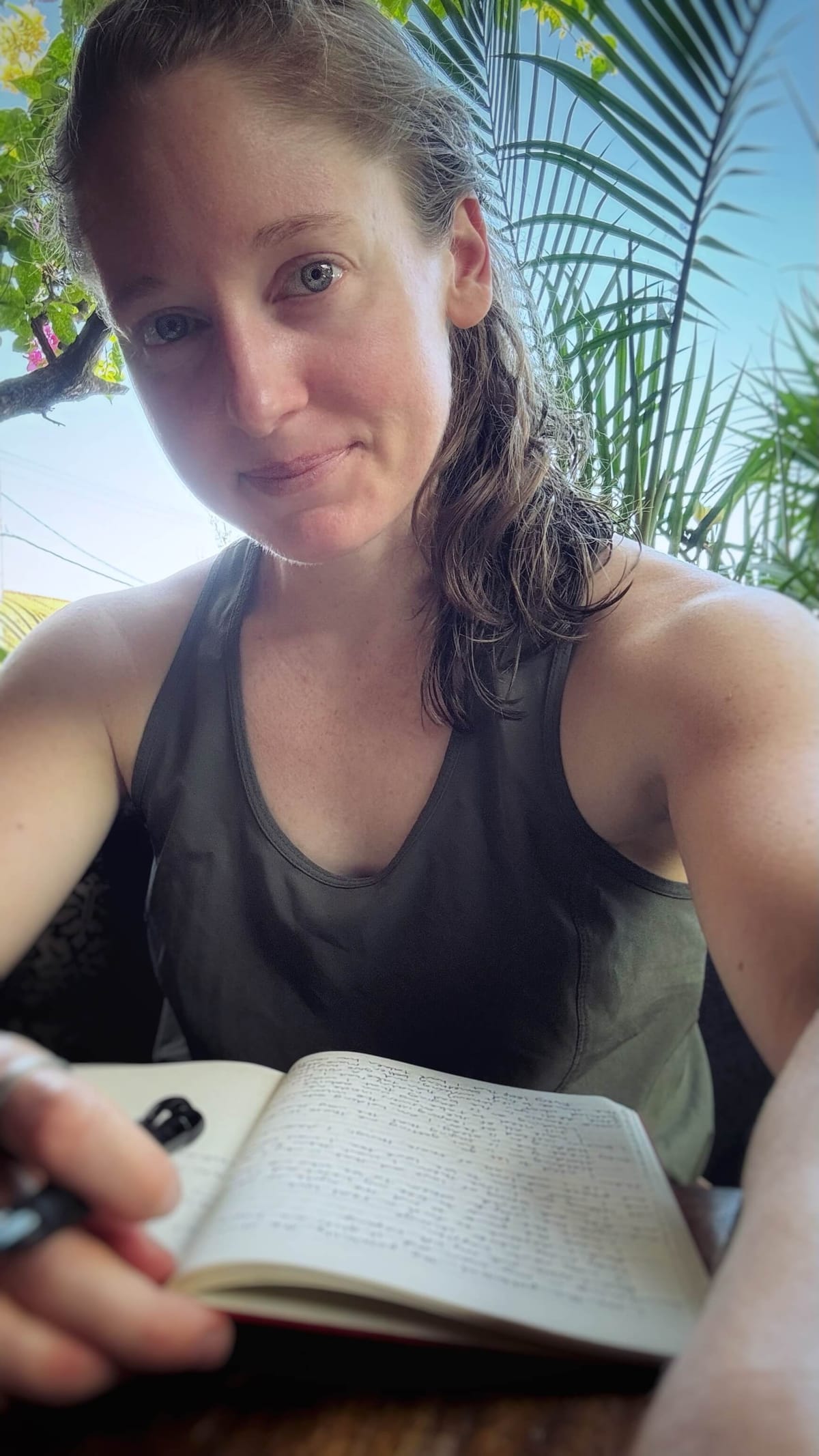
In this post I debunked the myth that a solo journey around the world holds the unique keys to our soul liberation.
How to Have A Midlife Crisis – Without Blowing Up Your Life
Why don't traveling the world by yacht, robbing the cradle and spending your kids' college savings on a sports car help you navigate your midlife crisis?
They lack intention.
There's not much difference between those midlife crisis choices and doomscrolling, other than that the other three cost you money. Ultimately, what all of these things have in common is that they're distractions from you actually sitting with the real problem that your midlife crisis is pointing toward.
If you're in a midlife crisis, it helps to get clear on what exactly is troubling you, get intentional about what you want out of life, and then start taking action to live more in alignment with your values.
Here are some tools to consider using to support you in navigating the stages of a midlife crisis, in case you still want to choose (most of) the life you have on the other side:
- Meditation: If I had to pick one tool above all other options in the toolkit that can help you through your midlife crisis, it would be this one. Maintaining a regular habit of checking in with yourself, how you're feeling, what's on your mind, and practicing self-compassion will help you navigate the challenging thoughts and feelings that come with a midlife crisis. I recommend at least 20 minutes daily, and it doesn't necessarily have to look like sitting on a cushion with your eyes closed. If you want support in building and maintaining a meditation habit, check out my group and private offerings.
- Journaling: Even if you don't think you're a writer, journaling might surprise you. Giving ourselves a judgment-free space to pour out everything that's on our mind will help you to see what actually needs your attention, and to let go of what's bothering you so you can focus more on the rest of your day. Below, I've listed some questions to ask yourself in your midlife crisis that would make for great free-writing prompts. (You can also contemplate them in meditation or while walking in nature.) Some people also find benefit in the daily habit of "morning pages," as popularized by the 12-week workbook, The Artist's Way by Julia Cameron.
- Alone time, disconnected, in nature: Airplane mode is my favorite setting on my phone. Get outside. Notice the trees, the flowers, the birds, the earth, the air, the sky and the sun. Breathe some fresh air, and allow yourself to be. When everything feels like it's spinning out of control, sometimes all you need is a change of environment to ground you.
- Somatic movement: This sounds more esoteric than it is. Essentially, it's moving in a way that feels natural to your body. It might be dance, it might be yoga, it might be stretching, it might be free movement. It might even be movement that reminds your body of its primal nature, or re-patterns how you learned to explore the world as a baby. In addition to teaching meditation, I'm also a certified somatic practitioner, and I love helping people access more freedom in their bodies. This modality has changed the way I approach the post-surgical trauma that has defined my posture, and even begun to heal chronic back pain. If you're interested in exploring this together, check out my group and private offerings. The reason this is a useful tool during a midlife crisis is because our thoughts and feelings are connected to our body sensations. We feel something in the body and the brain jumps to explain it. Accessing new patterns of movement in the body can unlock new ways of thinking in the mind. It's pretty cool.
- Sabbatical leave: If you have the ability to take a break for a set period of time and return to your job after, I highly recommend it. I was self-employed and had saved enough that I could create this leave for myself. If you're going through a challenging time, it's worth asking at work what your options are.
- Volunteer work: During my sabbatical, I spent a couple of months volunteering at different meditation retreat centers in Australia and New Zealand. The routine of helping others helped bring a sense of stability and purpose to an otherwise deeply destabilizing time.
- Solo travel: Sometimes we just need a break from all of the people and places that we've become accustomed to and that are making us feel suffocated / disillusioned / uncertain. Taking even a short solo trip creates the space for us to reconnect with ourselves, remember what lights us up, and return to life with a stronger sense of who we are and how we want to engage with the world.
- Meeting new people: Whether solo travel is an option or not, making an intentional effort to meet new people where we live can help us navigate a midlife crisis. We often build our sense of self through the feedback we get from the people around us. When we meet new people, we get new feedback that can expand our ideas of ourselves and allow us to see sides of us that maybe have been in hiding, or that maybe we've never met before.
- Exploring new hobbies: Maybe you need a new family, or maybe you just need one night a week where you can go throw clay. 😂 Even the act of trying to find a new hobby can be fun. You'll probably try a few things you hate but sometimes all it takes is a reminder that there's still so much of life left for you to live and explore.
- Therapy & Setting boundaries: I've put these two together, because if setting boundaries is new to you, you're going to need support doing it. You have one life (that you know of) and you deserve to live it in alignment with your soul. A therapist can help you navigate this recalibration of your life, and the difficult conversations that it might require to get to the other side.

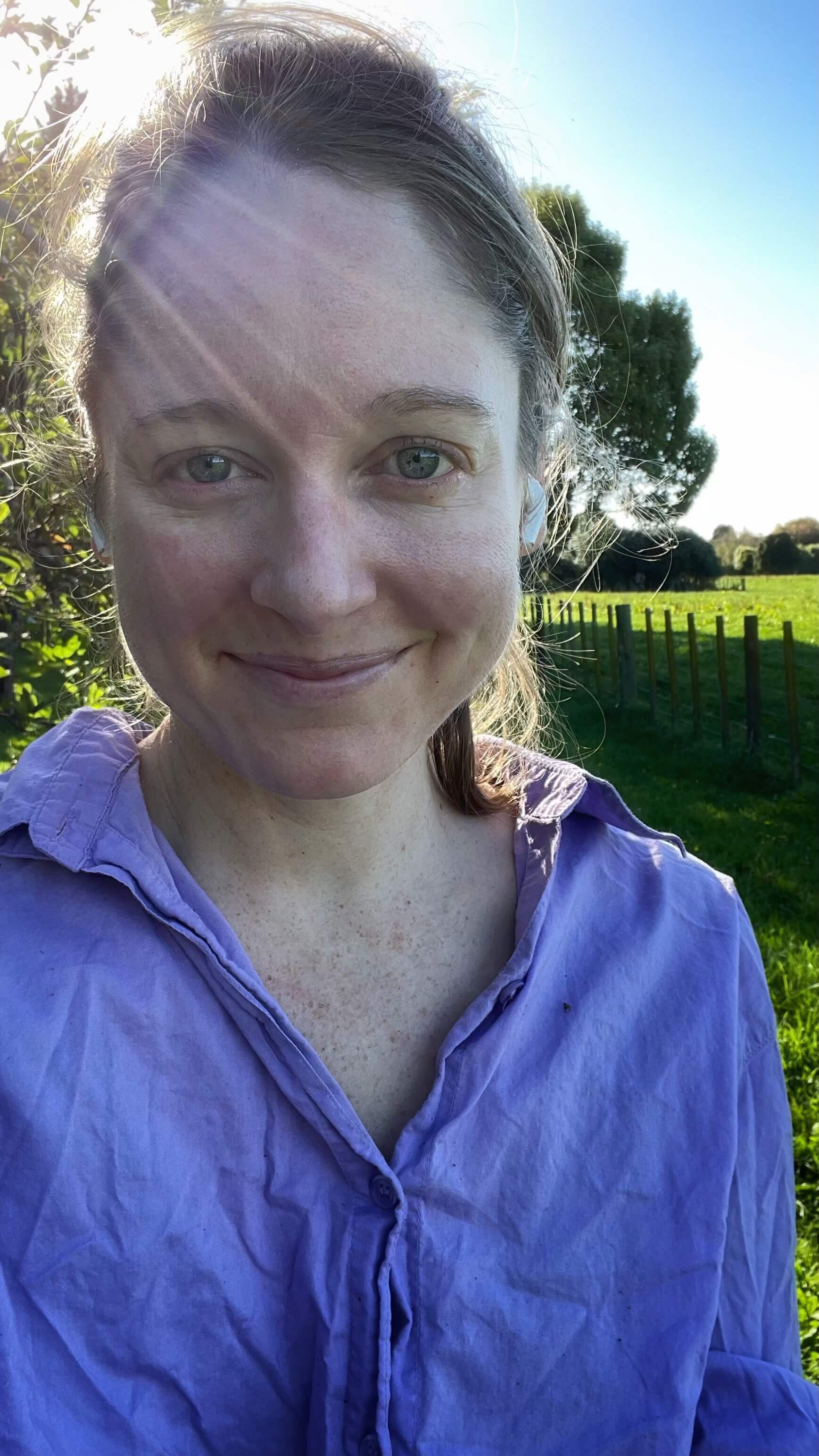
Midlife crisis turned midlife calm. I spent a month volunteering at a meditation retreat center in New Zealand. During the day, I'd do a mix of housework and gardening, and in the evenings I'd go for a run through the countryside. 10/10 recommend.
Questions to Ask In Your Midlife Crisis
These are some of the questions I asked myself.
- If I had one year left to live, how would I spend that time?
- If I were to die tomorrow, what would I regret not having done yet in my life?
- If I could change one thing about my life now, what would it be?
- What do I value? Make a list of every aspect of your life and then see if it pairs with one of your values. Are there any areas in my life that are out of alignment with my values? Are there any values that I state I hold but aren't reflected in my current life?
- How do my relationships with the people closest to me in my life make me feel? Is this in alignment with how I want to feel? What would need to happen to bring these relationships more in alignment?
- How do I feel when I go to work every day? Do I feel a sense of purpose and meaning in my career? What would need to change to feel meaning and purpose in my work, and to look forward to it?
- How is my health, physical and mental? Where is my health less-than-optimal, and what wisdom does that part of my body hold that I'm not acknowledging?
- What do I dislike about myself? Why am I angry with myself? How does this resentment show up in my life choices?
- What am I holding onto that I can't let go of? What do I get out of holding onto it instead of taking action to let it go or pursue it and seek resolution?
- Am I holding myself back from the life I know I want, or am I not fully choosing the life I have? Why?
Advice I'd Give Myself During a Midlife Crisis
I didn't know I was going through a midlife crisis until I was well into the middle of it. For over a year I thought something was wrong with me, the general malaise, the worsening physical symptoms, the growing sense that my life was meaningless. The words I would have wanted to hear at the start of my midlife crisis are actually not the truth about how my midlife crisis panned out. I would have wanted to hear that everything is going to be okay, that I'm going to get through this, that my career and friends will be waiting for me on the other side. That this is just a phase.
But the truth is that my entire life changed. And though I feel more me than I ever have in my entire life – not a lot about my old life survived the journey. Ultimately, that's okay. I still have so much life ahead of me and what I won't have are deathbed regrets.
Looking for Support Through A Big Life Change?
I'm a meditation teacher and trauma-informed coach (RYT-500) and I work with a small number of people 1:1. I'd love to empower you with mindfulness and somatic practices that help you feel more grounded, present, and courageous as you navigate the changes in your life. If that interests you, reach out and we can explore whether it's a good fit.
 Clara Ritger
If you loved this post, I think you'll also enjoy this one, a musing on the meaning of life and what it means to be human.